

“Those who support others are strongest when they are supported themselves.”
—Kathleen, A Minute for Mental Health
What We Do
A Minute for Mental Health partners with organizations, community groups, and teams to reduce burnout and strengthen emotional regulation through mental health education, team needs assessments, and well-being roadmap development. We offer practical workshops and tools that fit into real work settings—without adding to the workload. Our work is research-informed and focused on building self-reflection, regulation, and connection in ways that are sustainable and easy to use.
Our Vision
We envision a world where emotional well-being is a shared responsibility and helpers of all kinds—healthcare workers, first responders, educators, parents, caregivers, and social service professionals—have access to meaningful, practical support. We aim to be a trusted source for mental health education and self-guided wellness resources that are grounded in real life, shaped by lived experience, and rooted in community care.
Our Mission
A Minute for Mental Health exists to make trauma-informed mental wellness support accessible and actionable. Through education, assessment, and practical planning, we help individuals and teams pause, reflect, and regulate within their daily realities. Our mission is to bridge therapy and real-world demands by supporting resilience and well-being for those who support others.
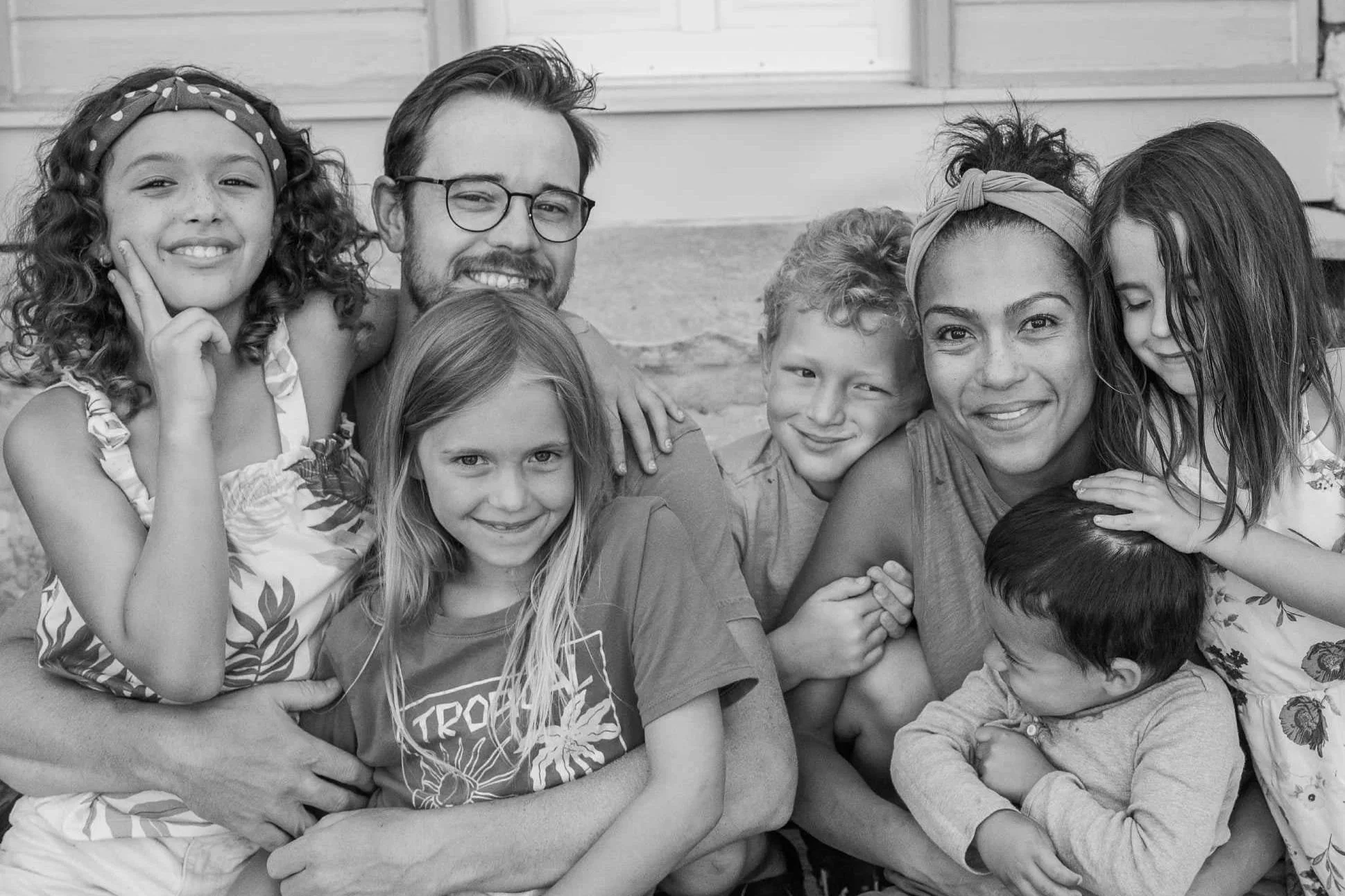
My name is Kathleen. I’m a mom to three and a stepmom to two. I’m a caregiver, a helper, and someone who knows burnout firsthand.
I’m a Registered Social Worker and Psychotherapist in Brant County, Ontario, where I support people healing from stress, trauma, and grief. I have a background in health sciences and trauma-informed care, and I’m the founder of A Minute for Mental Health.
Across healthcare, social services, education, and caregiving, burnout is not the exception—it’s the norm. Staff shortages, moral injury, and ongoing system strain leave people emotionally depleted. I see this daily in my work, and I’ve lived it myself. Helpers carry stress home. Caregivers struggle with boundaries. Teams lose connection under pressure. Parents and community members navigate grief and compassion fatigue with little practical support.
When I was burned out, I noticed a gap. Many mental health tools assume people have time, energy, and clarity. Most helpers don’t. That disconnect led me to create A Minute for Mental Health.
This work focuses on mental health education, practical tools, and team-level support that fit into real life. Small, intentional moments of pause can support regulation, reconnect people to their values, and interrupt cycles of stress. These minutes are designed to be realistic, repeatable, and accessible—even when time is limited.
Whether you’re here for a workshop, an assessment, a digital resource, or simply a moment to pause, I’m glad you’re here.
If you’d like to learn more about the story behind this work, you can visit the In This Moment blog.
If we’ve worked together in therapy, you may recognize how I often end sessions: “How are you feeling…in this moment?” It’s a simple question that reflects how change often happens—one minute at a time.
Thank you for being here.
Photo credit: Alana Marie, Alana Marie Lifestyle Photography
Join Our Team
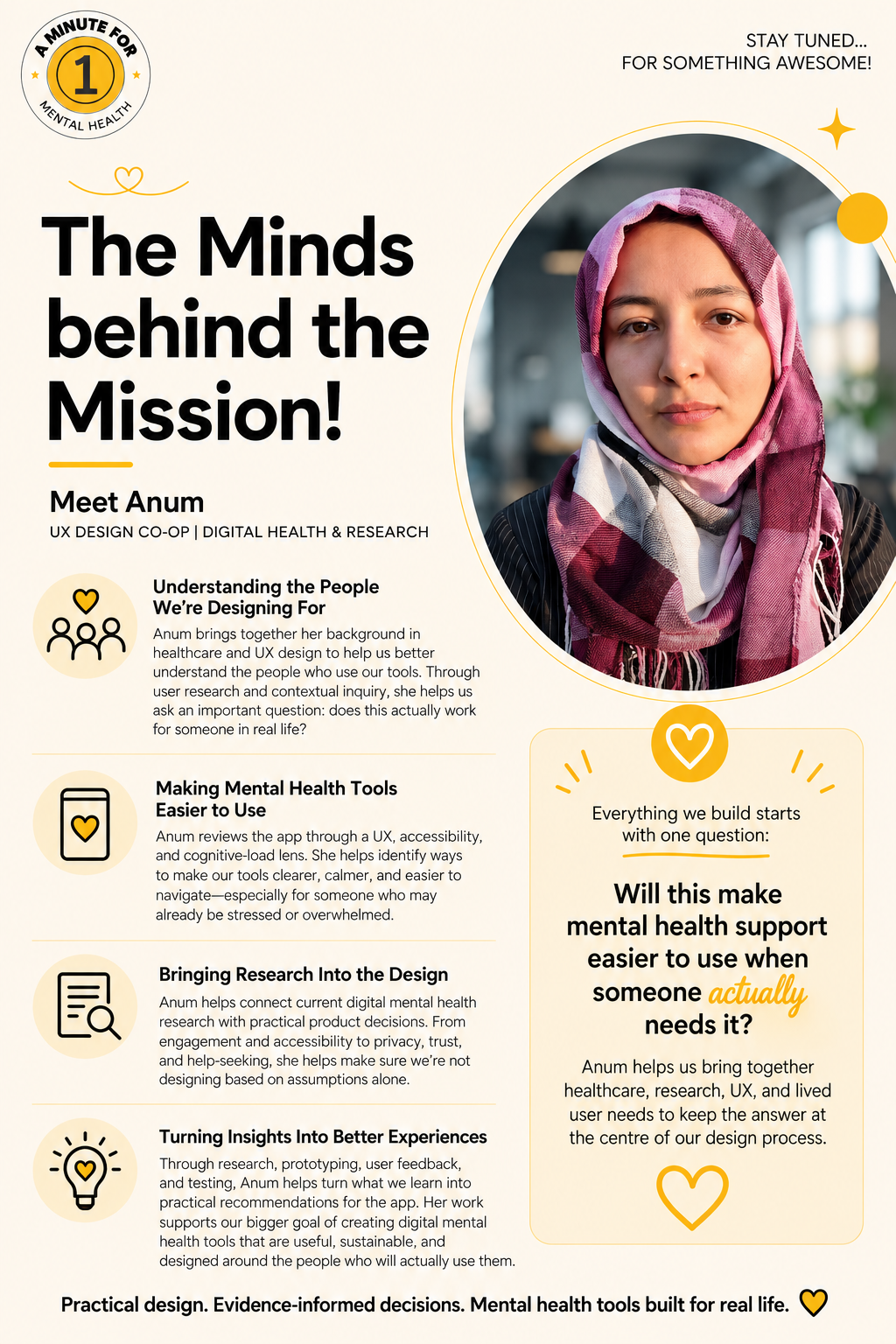
Anum Iftikhar
Digital Health Associate | Co-op Student/ Intern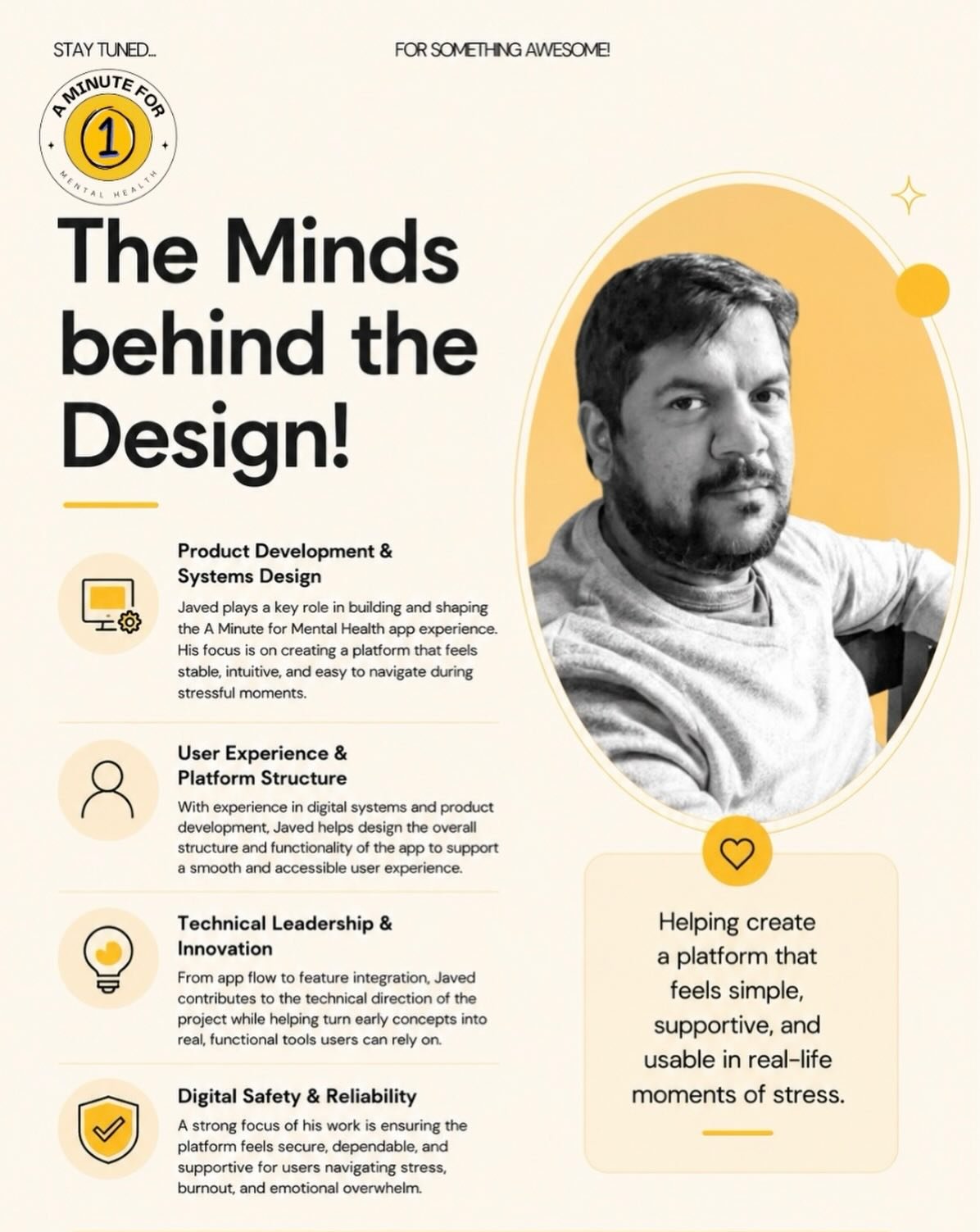
Javed Shaikh
Application Developer | Project Contractor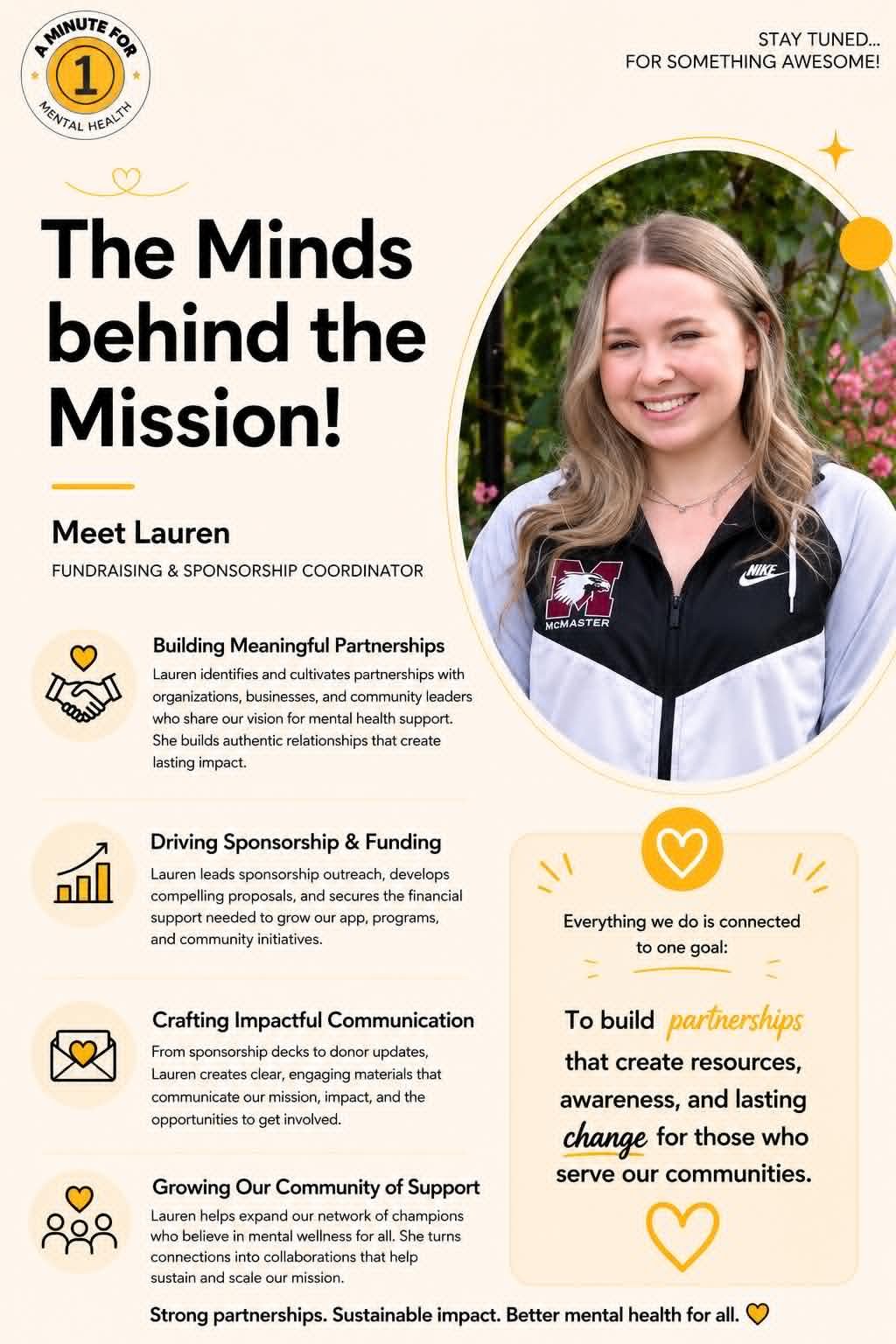
Lauren Gilbert
Fundraising & Sponsorship Coordinator | Student Staff Member
At A Minute for Mental Health, we stand against anti-Black racism in all its forms—individual, systemic, and institutional. We recognize that anti-Black racism is deeply rooted in our society and continues to cause harm through inequities in mental health care, education, employment, and justice.
We are committed to listening, learning, and taking action to address these inequities. This includes ensuring our work does not perpetuate harmful stereotypes, amplifying Black voices, partnering with Black-led organizations, and advocating for systemic change that promotes equity and dignity for Black communities.
Our work is guided by the belief that mental health education and support must be safe, accessible, and relevant to everyone—regardless of race, ethnicity, culture, gender identity, sexual orientation, ability, or socioeconomic status.
We intentionally design our programs and resources with diverse needs in mind, seeking input from communities we serve. We strive to create spaces where all people feel seen, respected, and valued, and where differences are celebrated as strengths.
Inclusivity is not a box to check—it’s an ongoing practice of self-reflection, adaptation, and accountability.